Insta360 GO Ultra vs DJI Osmo Nano: Which Tiny Camera Wins?
The tiny camera category has exploded. These thumb-sized devices capture 4K footage from perspectives impossible with traditional cameras, then automatically edit clips for social media.
Two cameras dominate this space: the Insta360 GO Ultra and the DJI Osmo Nano. Both are under $500. Both shoot 4K. Both target content creators who want maximum portability.
But which one deserves your money? After extensive testing, here is the definitive comparison.
Quick Overview
Insta360 GO Ultra
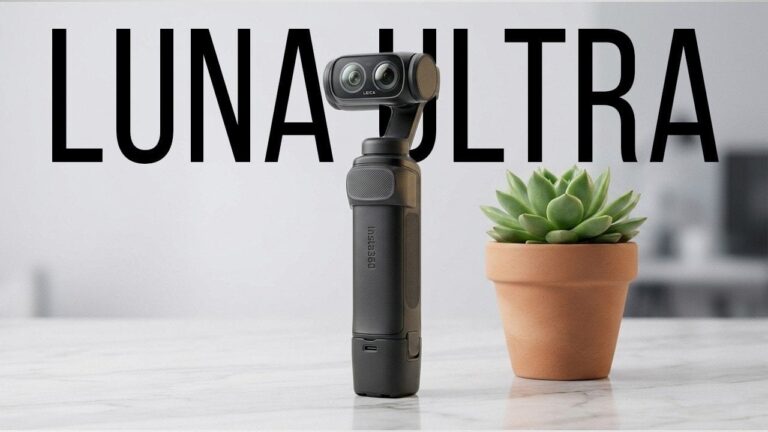
The GO Ultra is Insta360’s third-generation tiny camera, refining a formula they pioneered. At 39 grams, it is the smallest 4K camera available. The magnetic mounting system lets it clip to shirts, hats, pets, or any metal surface.
DJI Osmo Nano
The Osmo Nano is DJI’s entry into the tiny camera market. It prioritizes stabilization and simplicity, with a focus on reliable capture rather than AI editing features.
| Feature | Insta360 GO Ultra | DJI Osmo Nano |
|---|---|---|
| Weight | 39g | 48g |
| Video Resolution | 4K 30fps | 4K 30fps |
| Stabilization | FlowState (360°) | RockSteady |
| Waterproof | 5m (with case) | No |
| Storage | 64GB internal | 32GB internal |
| Battery Life | 38 min continuous | 45 min continuous |
| Charging Case | Yes, doubles as remote | Yes, basic |
| AI Editing | Auto editing, highlight detection | Basic trim only |
| Mounting | Magnetic + accessories | Magnetic + clip |
| Price | $449 | $299 |
Image Quality: Sharper vs. Cleaner
Both cameras shoot 4K, but the similarities end there.
The GO Ultra produces sharper footage with better dynamic range. Insta360’s color science prioritizes skin tones and natural lighting. Footage looks good straight out of camera without grading.
The Osmo Nano applies heavier noise reduction, resulting in slightly softer footage but cleaner shadows. Colors are more saturated, which works well for social media but limits grading flexibility.
In low light, the GO Ultra maintains detail longer. The Osmo Nano starts smearing fine details at ISO 800 and above.
Stabilization: FlowState Dominates
This is where the GO Ultra pulls ahead decisively.
Insta360’s FlowState stabilization is the best in the business. It uses 360-degree data to keep footage level regardless of camera orientation. You can spin the camera 360 degrees and the horizon stays flat. Walking footage looks like it was shot on a gimbal.
DJI’s RockSteady on the Nano is competent but limited. It handles vertical shake well but struggles with rotation. Footage looks smooth but not gimbal-smooth.
Usability: AI Magic vs. Manual Control
Insta360 GO Ultra
The GO Ultra is built for creators who hate editing. Press the button to record. The AI identifies highlights, creates clips, and syncs them to your phone. You can post within minutes of shooting.
The charging case is brilliant. It holds 2.5 charges, acts as a remote trigger, and automatically transfers footage to your phone.
DJI Osmo Nano
The Osmo Nano is simpler. Record, transfer, edit manually. DJI’s Mimo app offers basic trimming and filters but lacks the AI magic of Insta360’s app.
For creators who prefer manual control, this is refreshing. For those who want automatic content creation, it feels limiting.
Mounting and Accessories
Both cameras use magnetic mounting, but Insta360’s ecosystem is more mature.
The GO Ultra includes a pendant for chest mounting, a pivot stand for surfaces, and a hat mount for POV shots. Third-party accessories are abundant.
The Osmo Nano includes a basic magnetic clip. DJI’s accessory range is growing but currently limited.
Battery Life Reality Check
Neither camera offers all-day battery life. Both rely on charging cases.
The GO Ultra records 38 minutes continuously. The charging case provides 2.5 full charges, totaling roughly 130 minutes of recording.
The Osmo Nano records 45 minutes continuously. Its case provides 2 charges, totaling roughly 135 minutes.
In practice, they are equivalent. Both require midday charging during heavy use.
Price and Value: The $150 Question
The Osmo Nano at $299 is aggressively priced. It delivers 80% of the GO Ultra’s functionality at significantly cheaper.
The GO Ultra at $449 costs more but justifies the premium with superior stabilization, AI editing, and accessory ecosystem.
Which Should You Buy?
Buy the Insta360 GO Ultra if:
- You want the best stabilization available
- AI-powered editing appeals to you
- You need waterproof capability
- You have the budget for premium features
- You want the most mature accessory ecosystem
Buy the DJI Osmo Nano if:
- You are budget-conscious
- You prefer manual editing control
- You need slightly longer battery life
- You trust the DJI brand and ecosystem
- You want simple, reliable capture
The GO Ultra wins this comparison, but not by knockout. Its FlowState stabilization and AI editing create a workflow that the Osmo Nano cannot match. For content creators prioritizing efficiency and quality, the extra $150 is worth it.
However, the Osmo Nano is the smarter choice for beginners or budget buyers. It proves that tiny 4K cameras do not need to cost $450 to be useful.